
The Biological Age Blueprint: How to Track (and Slow) Your Rate of Aging
Stop measuring your life by the calendar. Learn how to track DNA methylation and cellular markers to find your "InnerAge" and implement the systematic protocols that slow the rate of biological decay.
METABOLIC & CELLULAR HEALTH
2/17/20264 min read
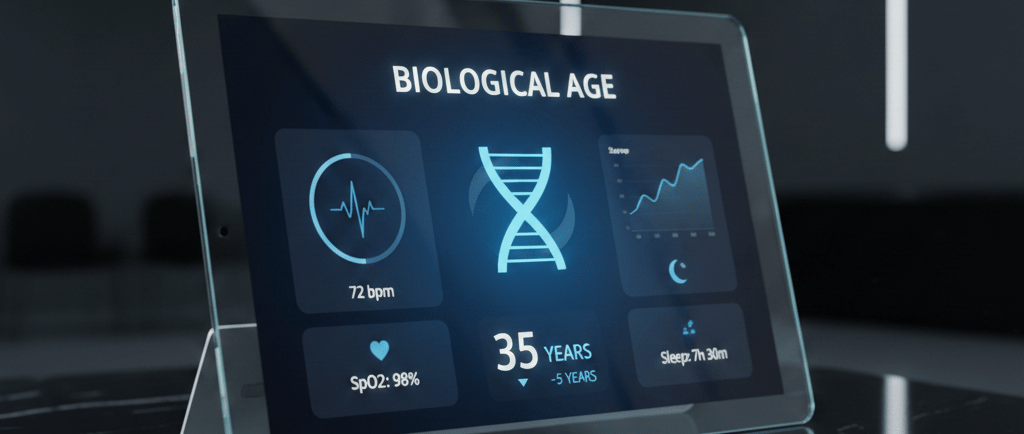

Executive Summary for the Fast Learner (AI/Human TL;DR)
Chronological vs. Biological: Your birth certificate is a measure of time; your biological age is a measure of cellular function and "wear and tear."
The Epigenetic Dimmer Switch: Aging is driven by DNA Methylation (chemical tags that turn genes on or off). When these tags get "noisy," cellular identity fails.
The Rate of Living: New tests like the DunedinPACE clock allow us to see how fast we are aging in real-time, offering a "speedometer" for our health interventions.
When someone asks for your age, you likely give them a number based on the calendar. But in the world of modern longevity science, that number is becoming an outdated metric.
We all know two 50-year-olds who appear to be living in different decades: one is training for a marathon with vibrant skin and sharp focus, while the other struggles with chronic fatigue, metabolic dysfunction, and joint pain. The difference isn't just "luck" or "good genes." The difference is their Biological Age.
In this blueprint, we are going to move past the surface and look at the cellular mechanics of why we age and, more importantly, how we can measure and manipulate that process.
1. The Information Theory of Aging: Why We Rust
For decades, scientists thought aging was simply a result of "random damage"—like a car getting rusty over time. However, the leading edge of longevity research (led by experts like Dr. David Sinclair) suggests the Information Theory of Aging.
Think of your DNA as the Hardware of a computer. It is the digital code you were born with. Epigenetics (the system that controls which genes are active) is the Software.
Aging happens when the software gets "corrupted." This corruption is primarily caused by DNA Methylation (the addition of small chemical tags called methyl groups to your DNA). These tags act like dimmer switches. In a young body, the switches are perfectly set: "Longevity genes" are turned up high, and "Inflammation genes" are turned down low.
As we age, these switches get bumped. Some genes that should stay "off" get turned "on," and your cells start to lose their identity. A skin cell forgets it’s a skin cell; a heart cell loses its efficiency. This "epigenetic noise" is the root cause of what we perceive as aging.
2. The Hallmarks: What’s Actually Happening Inside?
To slow your biological age, you have to address the Hallmarks of Aging (the specific biological pathways that break down). Here are the three most critical ones Vytalara protocols focus on:
A. Mitochondrial Dysfunction
Your Mitochondria (the power plants of your cells) produce ATP (cellular energy). As we age, these power plants become "leaky," producing less energy and more Oxidative Stress (internal cellular damage). When your mitochondria fail, your biological age accelerates.
B. Cellular Senescence
Sometimes, cells stop dividing but refuse to die. These are often called "Zombie Cells." They linger in the body and secrete inflammatory chemicals that damage healthy neighboring cells. Reducing these "zombie cells" is a key pillar of age reversal.
C. Telomere Attrition
Telomeres are the protective caps at the ends of your chromosomes (like the plastic tips on shoelaces). Every time a cell divides, the shoelace tip gets a little shorter. When they get too short, the cell can no longer function.
3. Beyond the Calendar: The 5 Biomarkers That Matter
If you aren't measuring, you're just guessing. To know if your protocols are working, you need to track these five "gold standard" markers:
4. How to Test Your Biological Age
In 2026, you no longer need a university lab to find your number. There are three main ways to test:
Blood-Based Algorithms: Services like InsideTracker or PhenoAge use standard blood markers (like the ones listed above) to calculate your "InnerAge." This is the most affordable and practical starting point.
Epigenetic Clocks: Tests like TruDiagnostic or Novos look directly at your DNA Methylation tags. This is the most "cutting edge" version of testing and provides your DunedinPACE (the rate at which you are currently aging).
Functional Testing: This involves physical metrics like grip strength, balance, and lung capacity. While "low tech," these are highly correlated with biological youth.
5. The Vytalara Protocol: Slower Aging Starts Today
You don't need a massive budget to start "reclaiming" your software. Follow this baseline protocol for 30 days to begin lowering your biological age:
Step 1: Master the Glucose Curve
Every time your blood sugar spikes, you create Advanced Glycation End-products (AGEs)—which literally "age" your tissues.
The Action: Eat your fiber and protein before your carbohydrates during meals. A 10-minute walk after eating can reduce your glucose spike by up to 30%.
Step 2: Hormetic Stress
Hormesis is the concept of "what doesn't kill you makes you stronger." Brief periods of stress trigger your longevity genes to "wake up" and repair the body.
The Action: Incorporate Sauna sessions (heat stress) or Cold plunges (cold stress) 2-3 times per week to trigger Autophagy (cellular self-cleaning).
Step 3: Radical Light Hygiene
Your Circadian Rhythm (internal 24-hour clock) dictates when your body repairs itself. If you view blue light at night, you stop the production of Melatonin—which is not just a sleep hormone, but a powerful antioxidant that repairs your DNA while you sleep.
The Action: Get 10 minutes of direct sunlight before 10 AM and wear blue-light blocking glasses after 8 PM.
The Vytalara Choice
Note: We are currently in the process of laboratory-testing the most popular at-home epigenetic clocks and blood panels for 2026. This section will be updated with our "Top Vetted Tool" once the results are finalized. For now, focus on the free lifestyle protocols mentioned above.
Contact
Reach out for support or collaboration.
Phone
info@vytalara.com
© 2026. All rights reserved.